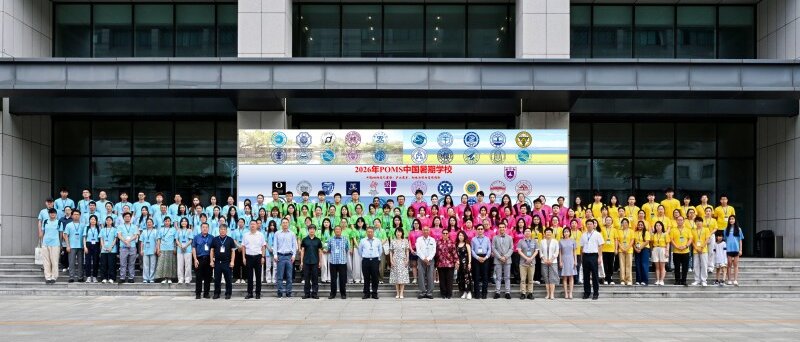
From August 24 to 28, 2026, the 2026 POMS Chinese Summer School was successfully held at Dongbei University of Finance and Economics (DUFE). The Summer School was jointly organized by the Production and Operations Management Society (POMS) and the China Society for Optimization, Overall Planning and Economic Mathematics, with support from a key international cooperation project of the China Association for Science and Technology (CAST). It was co-hosted by DUFE, the Higher Education Management Subcommittee of the China Society for Optimization, Overall Planning and Economic Mathematics, the Liaoning Provincial Center for Graduate Innovation and Academic Exchange in Public Administration.
With the theme “AI-Driven Paradigm Shift: Industrial Transformation, Resilient Governance, and Management Innovation,” the event brought together 162 formal participants from more than 50 universities, including Peking University, University of Science and Technology of China, Fudan University, Tianjin University, Tongji University, Nankai University, Shandong University, Hunan University, Southeast University, Dalian University of Technology, Northwestern Polytechnical University, and University of Electronic Science and Technology of China.
The Summer School featured a distinguished group of scholars in production and operations management, artificial intelligence, digital governance, and public administration. Invited faculty included Subodha Kumar, Chair of the POMS Executive Board, Co-Editor-in-Chief of Production and Operations Management, and Professor at Temple University; Nagesh Murthy, former President of POMS, Co-Editor-in-Chief of Decision Sciences, and Professor at the University of Oregon; Tava Olsen, Area Editor of Operations Research, Senior Editor of Production and Operations Management, and Professor at Melbourne Business School; Tinglong Dai of Johns Hopkins University; Hossein Rikhtehgar Berenji of the University of the Pacific; and LIU Fang, Professor at Durham University. Other distinguished speakers included GUAN Zhongcheng of the Chinese Academy of Sciences; ZHU Xufeng and LIN Zhijie, Professors at Tsinghua University; WEI Jiuchang, Professor at the University of Science and Technology of China; SUN Tianshu Professors at Cheung Kong Graduate School of Business; PENG Yijie, Professor at Nanjing University; LÜ Xin, Professor at the National University of Defense Technology; ZHENG Jie, Professor at Shandong University; LIU Ke, Research Professor at the Chinese Academy of Sciences; and FANG Bihe, Professor at Hefei University of Technology.
Over the five-day program, the Summer School offered 17 academic sessions covering emerging transformations in management science research driven by artificial intelligence, while also emphasizing the integration of digital technologies with Chinese management practice. The program reflected the long-standing educational philosophy of the POMS Chinese Summer School: “International Approaches, Chinese Issues.”
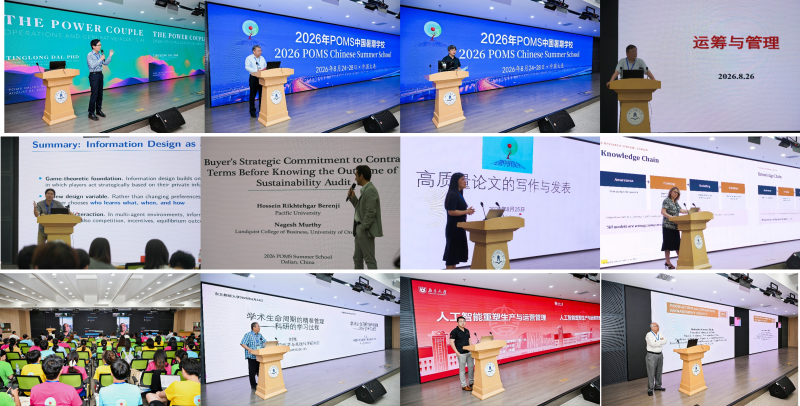
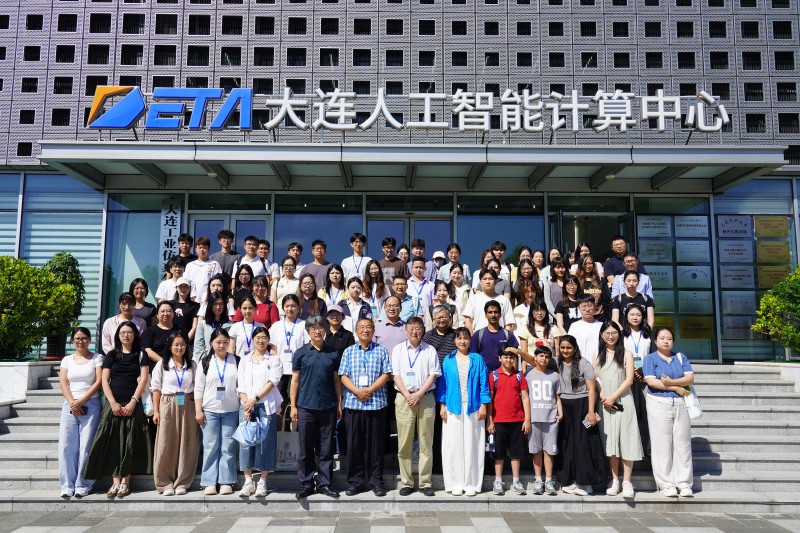
In addition, 19 papers submitted by participants were selected for on-site presentations. Experts from POMS and universities in China and abroad provided detailed comments on research questions, theoretical contributions, research design, and publication strategies, offering targeted guidance to help young scholars further improve the quality and international relevance of their research. As part of the program, participants also visited the Dalian Artificial Intelligence Computing Center. The site visit focused on AI infrastructure, computing resource allocation, and practical applications of artificial intelligence. Through on-site discussions and exchanges, participants gained a deeper understanding of the development of AI technologies and their applications in economic and social governance.
The successful holding of the 2026 POMS Chinese Summer School further strengthened DUFE’s academic ties with leading international scholarly organizations and universities at home and abroad. It provided an open platform for young scholars to engage with international research frontiers and explore management issues grounded in Chinese practice. The program also contributed to DUFE’s efforts to advance high-level internationalization, promote interdisciplinary collaboration, and cultivate innovative talent.
Written by: QIAN Kun
Source: School of Public Administration