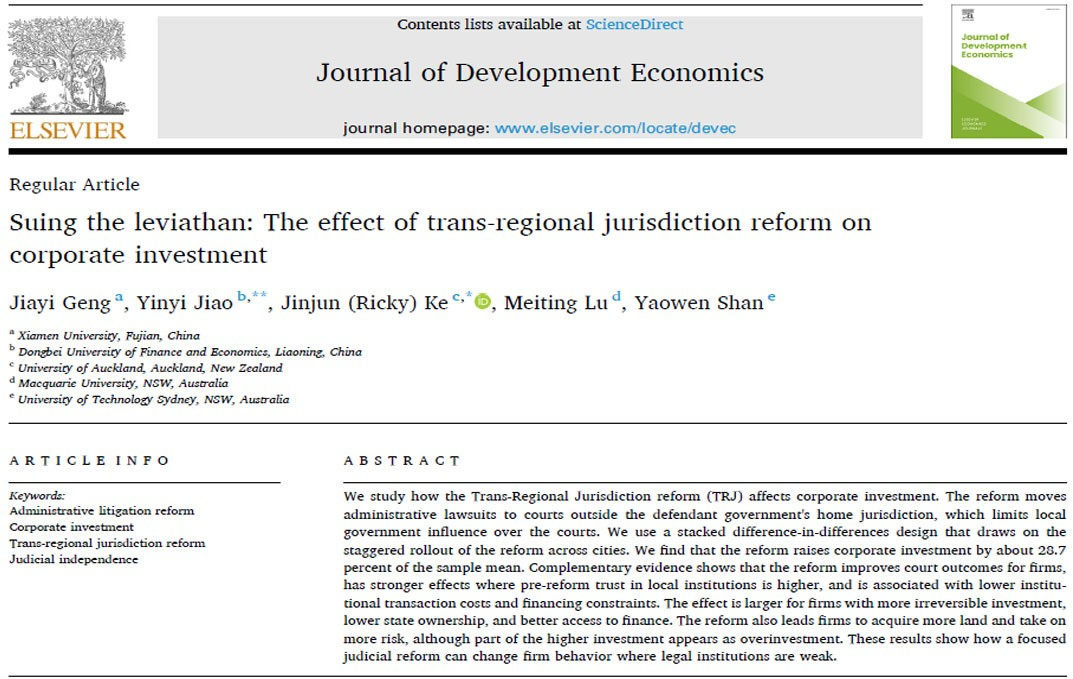
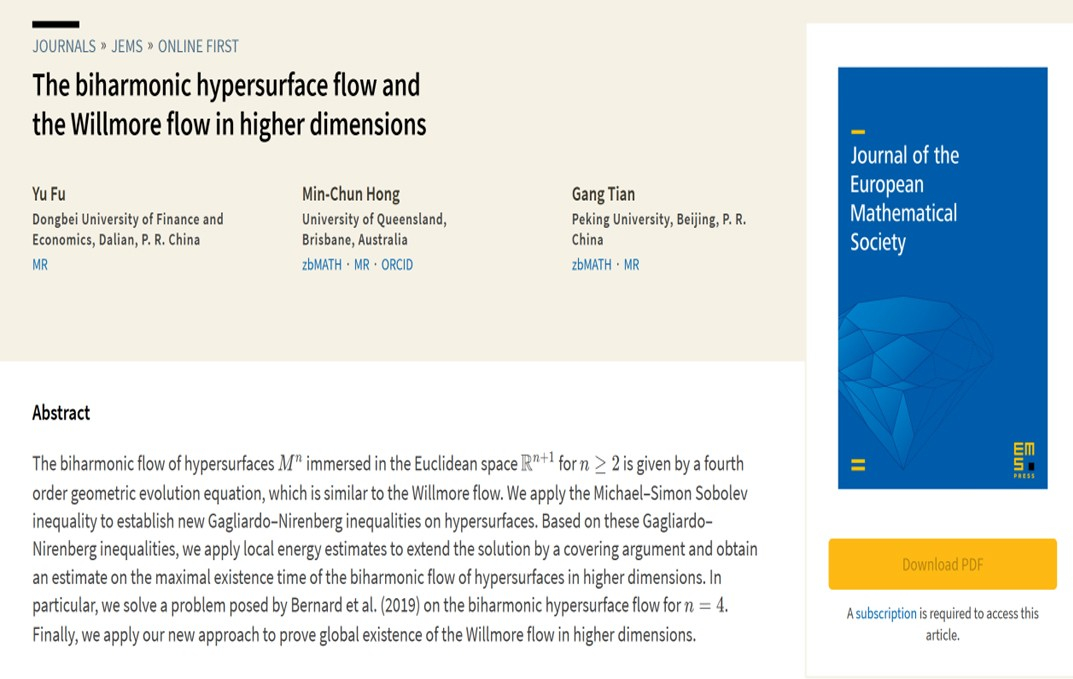
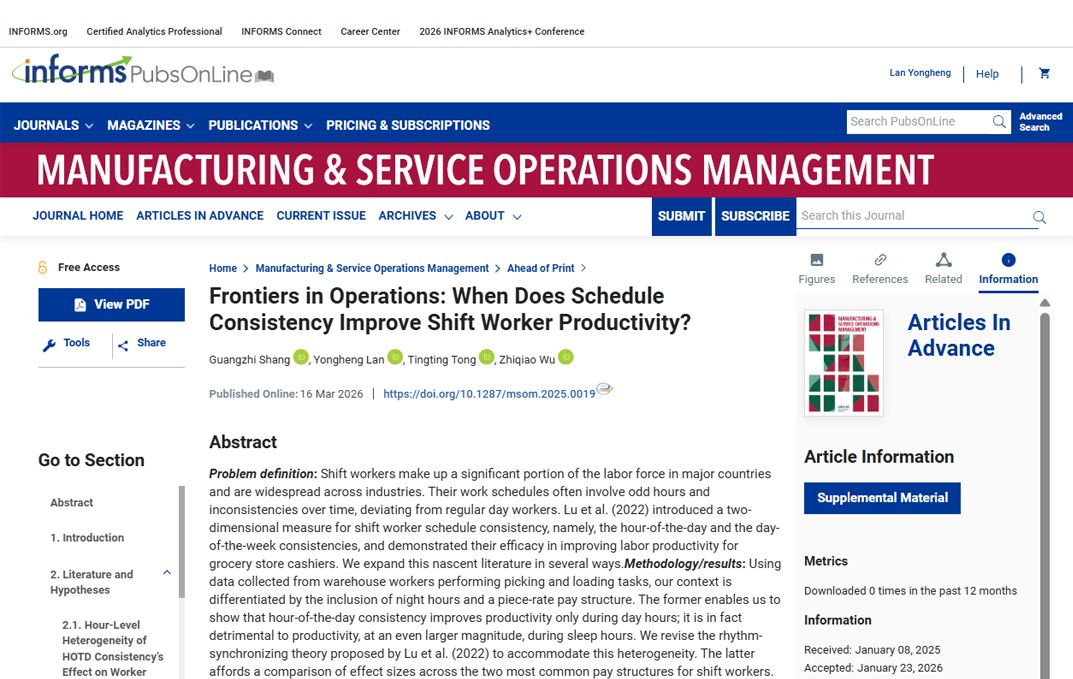
A research paper titled “Research Opportunities in Disaster Warning Signals from an Operations Management Perspective” by the team led by Professor LIU Dehai from the School of Public Administration at Dongbei University of Finance and Economics (DUFE) has been officially published in the Disaster Management section of POM, a prestigious UTD journal in the field of management.
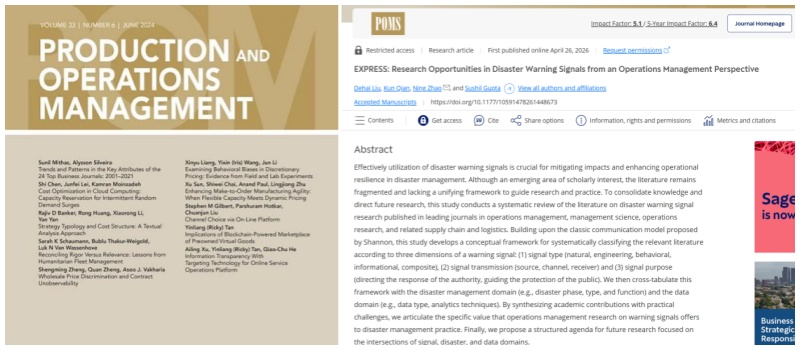
Submitted in December 2022, the paper underwent four rounds of rigorous revision before being accepted and published online in April 2026. The research team includes QIAN Kun, a doctoral candidate from the School of Management Science and Engineering at DUFE, Associate Professor ZHAO Ning (corresponding author) from the School of Public Administration, DUFE, and the late Professor Sushil Gupta from Florida International University.
The study addresses a critical issue in emergency management: despite the emergence of numerous early warning signs before disasters, response actions often fail. The research argues that the key challenge lies not merely in identifying risk warning signals, but rather in the ability to effectively translate early warnings into concrete actions.
The team systematically reviews management research on disaster warning signals over the past 50 years, drawing on a sample of 67 representative publications. Grounded in the framework of Shannon’s seminal 1948 communication theory, it develops a classification system for disaster warning signals. By defining key concepts such as signal types, transmission processes, noise, and objectives, the paper adopts a cross-dimensional analysis method across three domains: the warning signal, the disasters, and data. This approach identifies gaps in existing theoretical research, emerging frontiers, and practical challenges. The findings reveals that a truly effective early warning system relies not merely on abundant data, but crucially on the capacity to cut through noise, bridge organizational boundaries, and enable timely, coordinated public responses. Beyond examining how warning signals are detected, transmitted, and received, the paper emphasizes how organizations can better interpret warnings, communicate risks, and coordinate responses under uncertainty, offering actionable management insights for disaster governance, public safety, and resilience building.
As one of the UTD 24 top journals in management, Production and Operations Management enjoys an outstanding academic reputation. It features sections on emergency management, NPO management, and disruptive technology applications, with a 2024-2025 impact factor of 4.8 and a five-year average impact factor of 6.0.
The School of Public Administration actively advances its development strategy of “Digital and Intelligent Transformation, International Exchange, and Practical Application.” Aligning with major national strategic priorities, particularly the mission of safeguarding China’s security in five key areas, namely national defense, food, resources, industrial chains, and ecology, the school advances globally oriented research and interdisciplinary collaboration.
Over the past three years, the school’s emergency management research team has achieved remarkable results. To date, the team has published two papers in the Disaster Management section of POM, four papers in Risk Analysis (an ABS four-star journal ranked first in safety and emergency management), and two papers in the Journal of Management Science. These contributions have effectively shared China’s experiences in emergency management and amplified DUFE’s academic voice in the global emergency management community.
Written by: JIAN Yanchi
Source: School of Public Administration